How Do Dash Cams Work? A Straight-Talking Guide for 2026
Dash cams record your drive in loops, lock important clips, and can keep an eye on your parked car. Here's what actually matters, and which models deliver.
Here’s the gist: A dash cam records driving video in short loops, locks files when you hit a bump, and some even watch your car while parked. The short list: The Viofo A229 Plus for best value dual-channel, the Garmin Dash Cam Mini 3 if you want something small and simple, and the BlackVue DR970X for those who need cloud access from their phone. Read on if you want the full breakdown of how these things work and which one fits your car.
How Dash Cams Actually Work
All dash cams share the same basic DNA:
- Mounting & power: They stick to your windshield or dash, powered via a 12V plug or hardwire kit. Most use a supercapacitor (not a battery) for heat safety and clean shutdown.
- Loop recording: The camera starts when you start the car and records short clips (usually 1-3 minutes). When the microSD card fills up, it overwrites the oldest clips with new ones. Never lose footage unless a clip is locked.
- G-sensor & event locking: A tiny accelerometer detects sudden jolts (braking, collisions) and locks that clip so it doesn’t get overwritten. You can also manually save a clip, often via a button or app.
- Parking mode: While parked, the camera runs on a low-power state and wakes up when it senses motion or an impact. Some models require a hardwire kit to keep the camera powered. Higher-end cams can also upload clips to the cloud via LTE, so you get an alert on your phone.
- Storage & viewing: Most dash cams use microSD cards. A high-endurance card is strongly recommended because the camera is constantly writing and rewriting data. You can view footage on the camera’s screen (if equipped), via a smartphone app over Wi-Fi, or by pulling the card into a computer.
That’s the general story. Now let’s talk about specific models that do each part well.
Garmin Dash Cam Mini 3: The ‘Set It and Forget It’ Option
The Mini 3 is exactly what it sounds like: tiny, discreet, and dead simple. It has a small screen for setup, but is otherwise uncomplicated, just mount it, plug it in, and let it loop. It’s the perfect choice if you want basic front-facing protection without clutter.
- Ultra-compact: Small enough to hide behind the rearview mirror, virtually invisible from outside.
- App-based control: Set up and review clips through the Garmin Drive app. Wi-Fi built in.
- Parking mode: Available with a constant power cable (sold separately).
- Manual save button: Press the button on the camera to lock a clip.
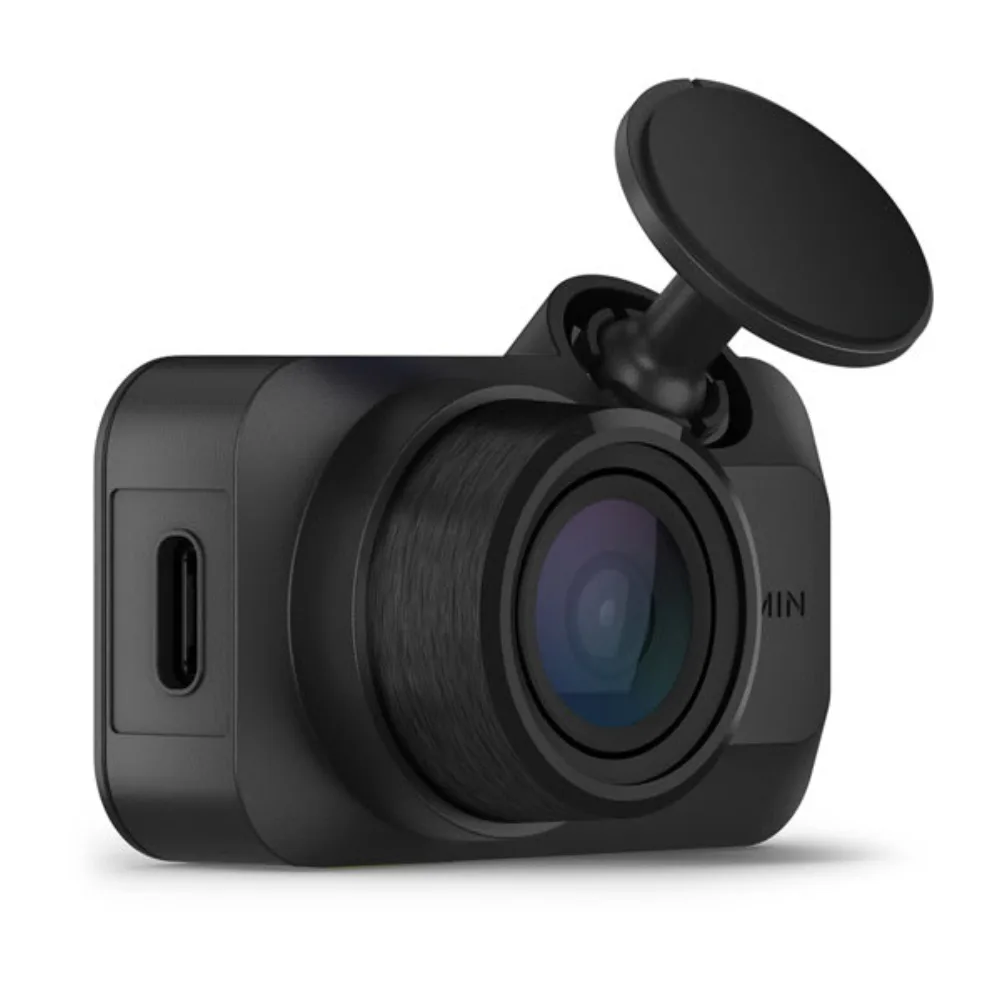 1-channel · GarminGarmin Dash Cam Mini 3around $150See price comparison →
Viofo A229 Plus: Best for Front & Rear Coverage
If you want dual-channel recording without breaking the bank, the A229 Plus is the sweet spot. It records the road ahead and behind you simultaneously, with solid parking mode and a reliable app.
- 2-channel: Front and rear cameras, both recording at 2K resolution (the rear isn’t stuck at 1080p like many cheap dual cams).
- Parking mode: Motion detection and time-lapse options. Can be used with a hardwire kit or an optional parking mode cable.
- GPS: Built-in, logs your speed and location to the video overlay.
- Heat-tolerant: Supercapacitor design handles summer temps without battery swelling.
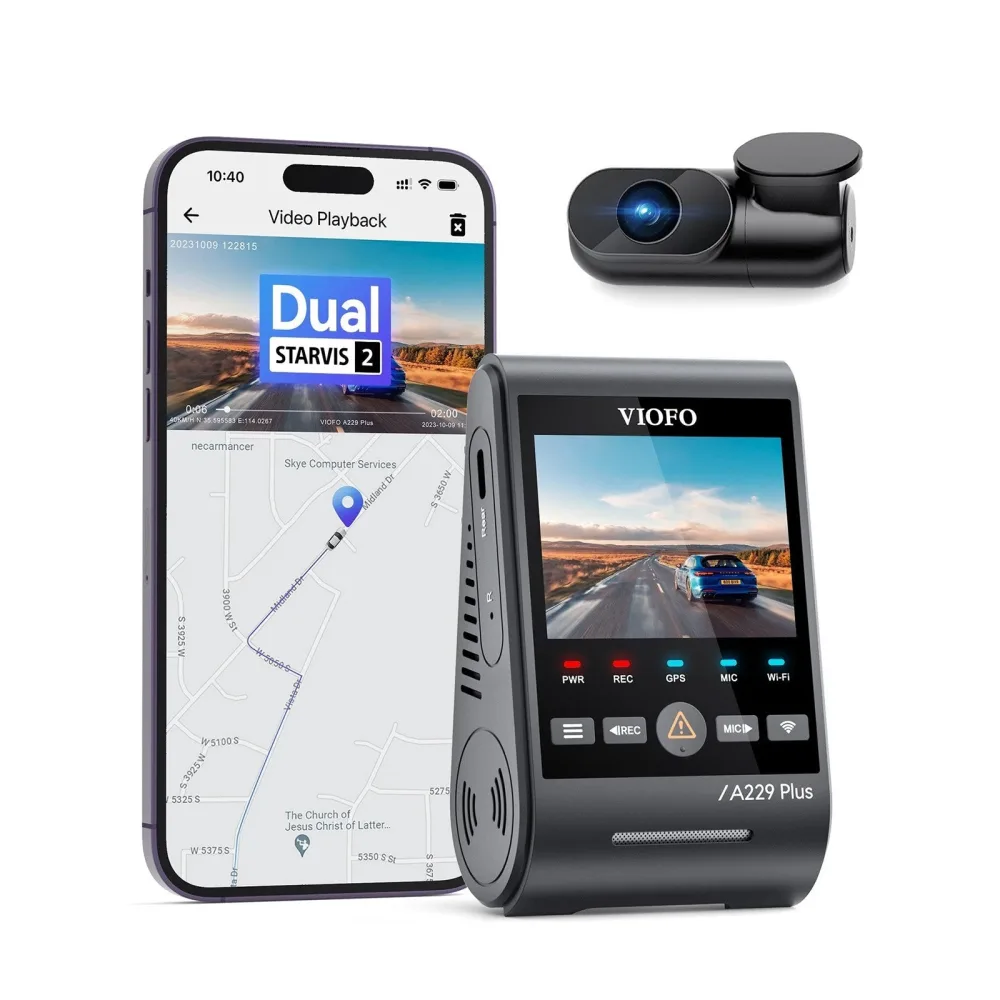 2-channel · ViofoViofo A229 Plus$159-230See price comparison →
Viofo A229 Pro: When You Need 4K Detail
Need to read license plates at highway speeds? The A229 Pro brings true 4K front resolution with a high-quality sensor. It’s the go-to for drivers who prioritize clarity over everything else.
- 4K front: Crisp detail that actually helps identify plates and road signs.
- 2K rear: The rear camera also records at 1440p, not a cheap 1080p downgrade.
- HDR: Handles bright headlights and dark shadows better than budget cams.
- Expandable to 3 channels: You can add an interior camera if you want cabin coverage.
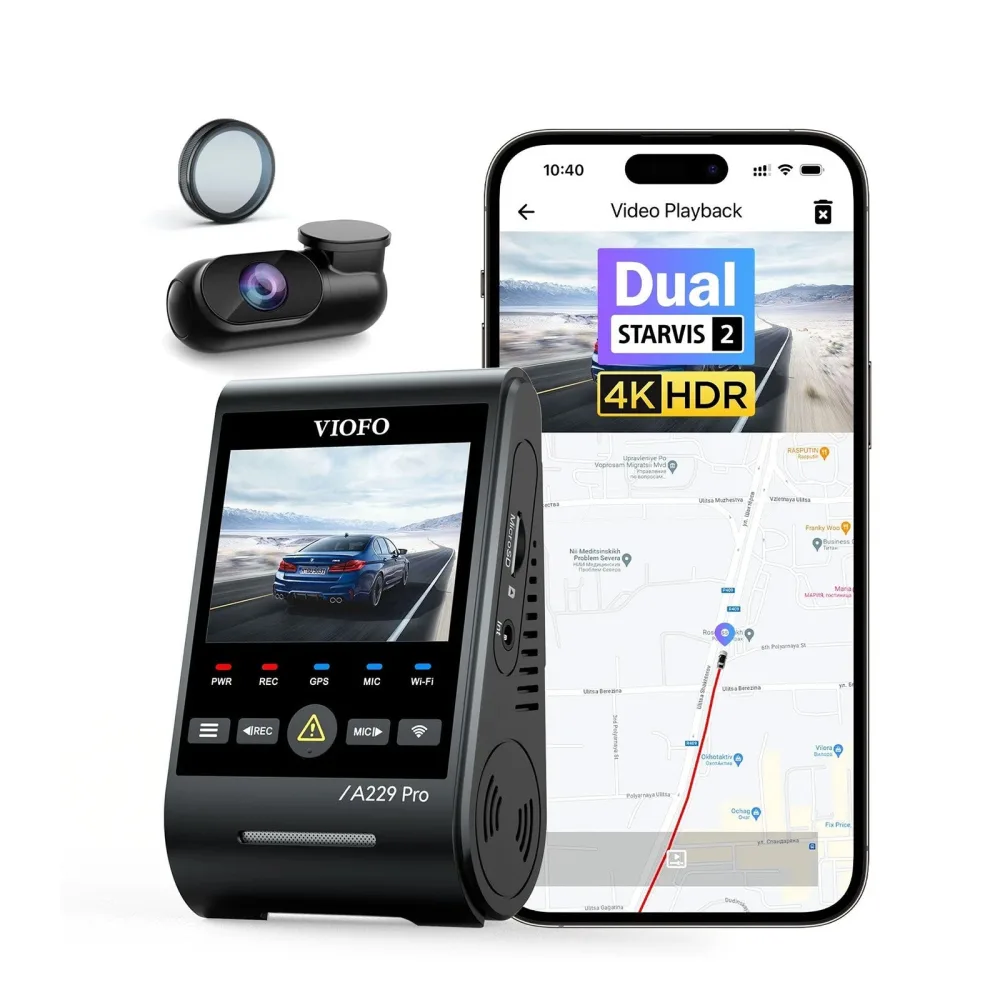 2-channel · ViofoViofo A229 Pro$219-380See price comparison →
Thinkware U3000: The Parking Mode Champion
When your car is parked for hours or days, the U3000 is the best in the business. Its advanced parking mode uses radar-based motion detection to wake the camera only when something happens, saving battery and card space.
- 4K front, 2K rear: Excellent daytime and night footage.
- Cloud connectivity: With an optional LTE module, get real-time alerts and live view on your phone.
- Energy-efficient parking: Radar sensor triggers recording only when needed, so your car battery lasts longer.
- Built-in GPS: Records location and speed.
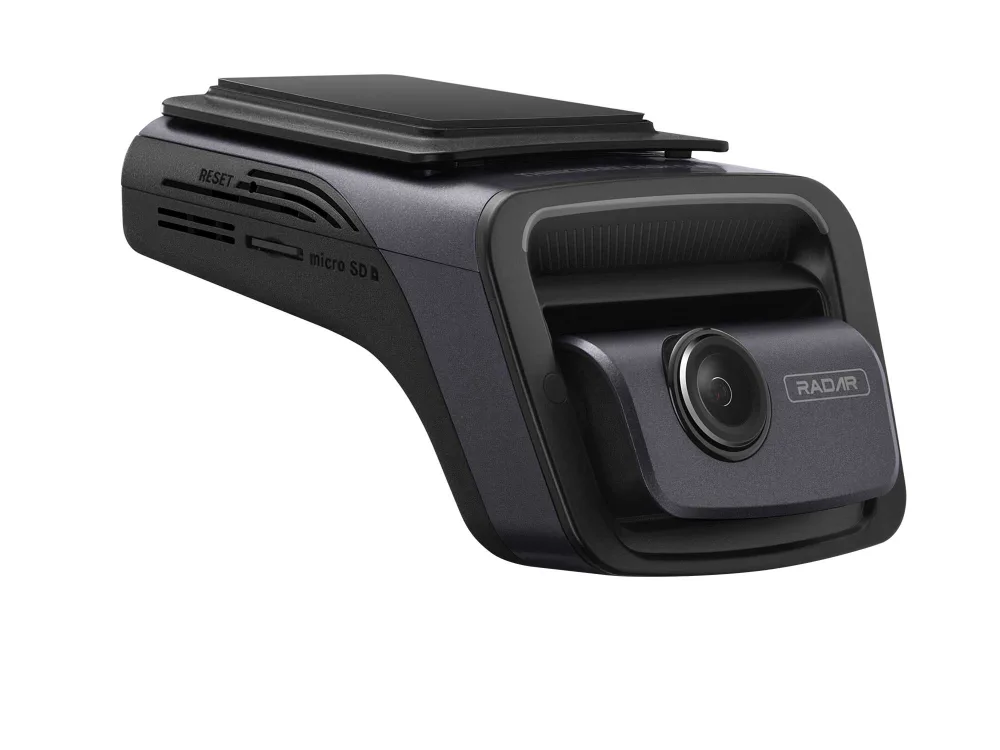 2-channel · ThinkwareThinkware U3000around $400See price comparison →
BlackVue DR970X: Cloud Connectivity Done Right
If you want to check your camera from anywhere (with an LTE hotspot or module), the DR970X is the gold standard. It uploads critical clips to the cloud automatically, so even if the camera is stolen, your footage is safe.
- 4K front: Sharp video with wide dynamic range.
- Cloud platform: View live feeds, get push notifications for impacts, and download clips via the BlackVue app.
- Parking mode: Works with the BlackVue Power Magic Pro or hardwire kit.
- Manual save button: Press the button on the camera to lock a clip.
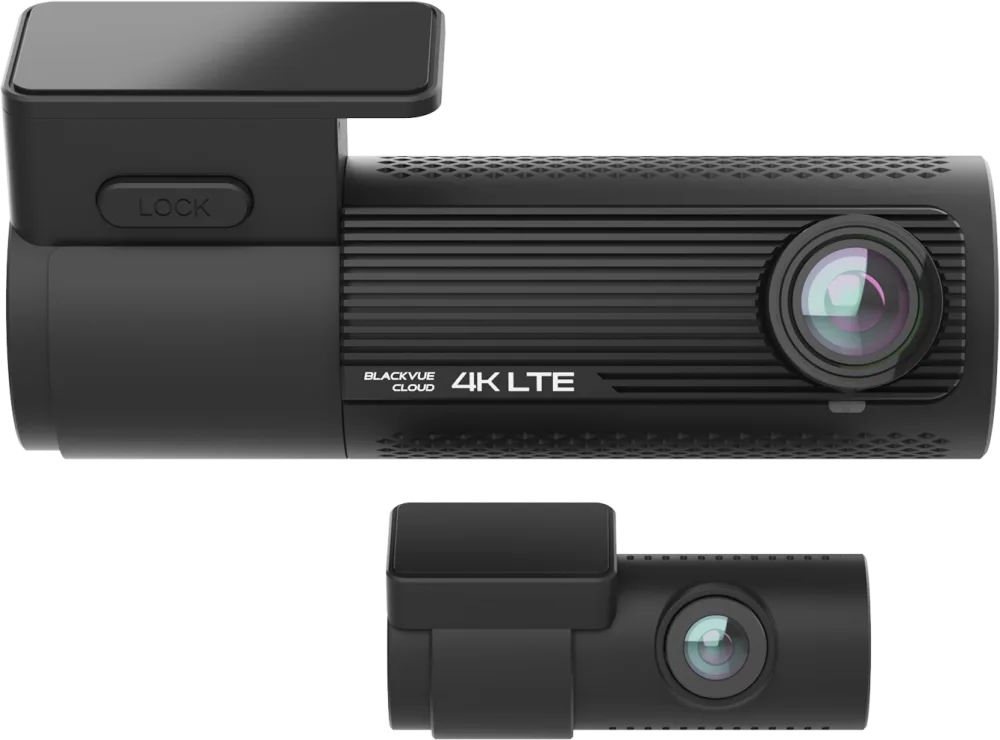 2-channel · BlackVueBlackVue DR970X-2CH$305-650See price comparison →
Bottom line: A dash cam is a simple tool with a big job. Pick the one that fits your driving habits: the Mini 3 if you want discreet simplicity, the A229 Plus for balanced dual coverage, the A229 Pro for 4K clarity, the U3000 for parking security, or the DR970X if you want cloud access. Whichever you choose, pair it with a high-endurance microSD card and a proper install to get the most out of it.
See the cams worth buying
We compare listed prices and link you straight to the lowest one, no fake urgency.