Supercapacitor vs Battery Dash Cam: Which Survives Summer?
The component you never think about is the biggest predictor of whether your camera lasts, especially if you park in the sun.
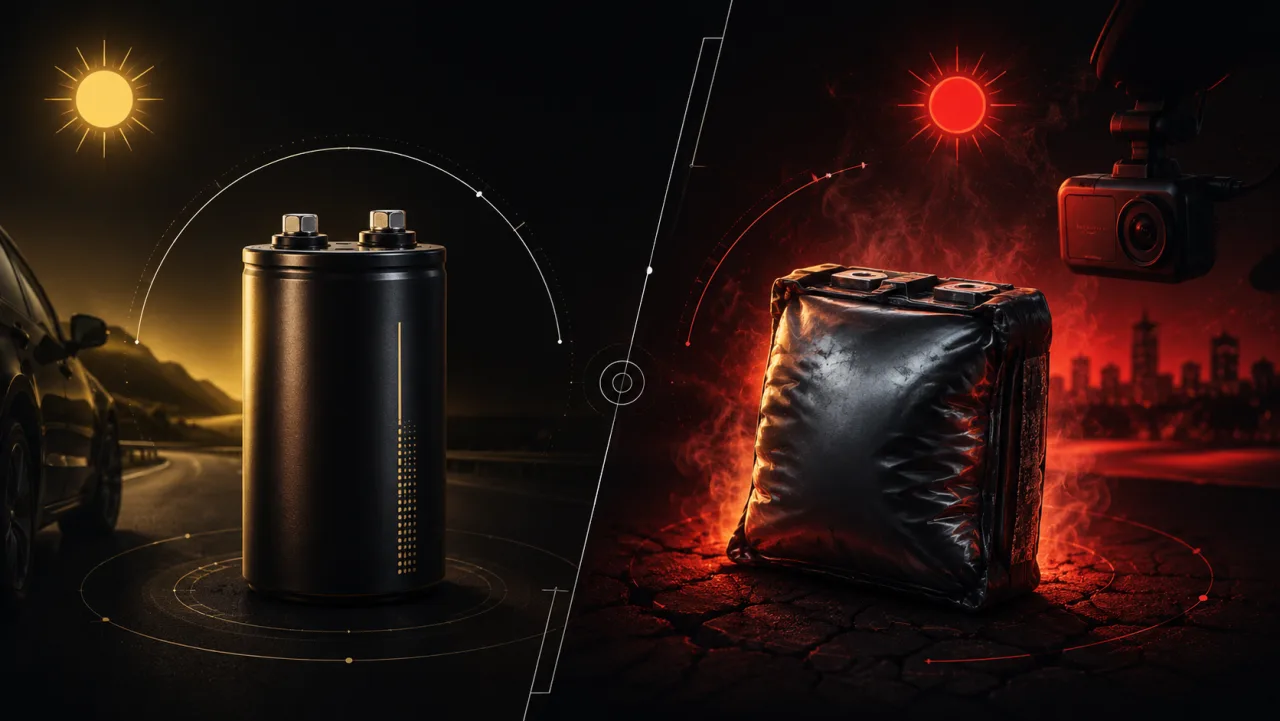
The component that decides how long your camera lasts
The supercapacitor vs battery dash cam question looks like a footnote on a spec sheet. It’s actually the single biggest predictor of whether your camera is still alive after a few summers, especially if you park outside.
Every dash cam has one of two things managing power through a shutdown: a small lithium battery, or a supercapacitor. They behave completely differently in heat. And heat is exactly what a windshield-mounted camera lives in.
Why heat is the real enemy
A dash cam sits at the top of the windshield, the hottest spot in a parked car. On a summer day, a closed cabin hits 120-160°F, and the glass bakes hardest. Lithium-ion batteries hate that. Sustained heat makes them swell, lose capacity, and eventually fail, sometimes bulging the camera housing.
That’s the root of most “my dash cam just died” and “my dash cam melted” stories from owners in warm states. It’s rarely a defect. It’s chemistry meeting a dashboard.
How a supercapacitor is different
A supercapacitor doesn’t store energy chemically: it holds a small charge physically, and it tolerates heat far better than a battery can. In a dash cam, its job is narrow: hold just enough charge to finish writing the current video file safely when power is cut, so you never get a corrupted last clip.
Because that’s all it needs to do, it doesn’t need much capacity, and it shrugs off temperatures that would cook a battery. Supercapacitor units routinely outlast battery ones by years.
The trade-offs are real but minor:
- Usually costs a bit more
- Holds less reserve: parking mode leans entirely on your hardwire power (which you should have anyway)
What you get back: longevity that makes the price difference irrelevant inside of two years.
How to tell which one you’re looking at
Manufacturers don’t always spell it out. Quick tells:
- Operating temperature range: a top rating around 140-160°F almost always means a supercapacitor. A battery unit typically caps near 120°F.
- “Supercapacitor” is a selling point: when a camera has one, the listing usually says so. Silence often means a battery.
- Parking-mode-focused models from enthusiast brands tend to use supercapacitors.
Battery isn’t always the wrong call
A battery dash cam is cheaper and can hold more reserve charge. Some can run short parking-mode sessions with no hardwiring at all. If you live in a mild climate, garage the car, or replace gear every couple of years anyway, a battery model is perfectly reasonable.
The mismatch to avoid: a battery camera doing daily parking mode on a sun-baked windshield in Phoenix or Miami.
In our catalog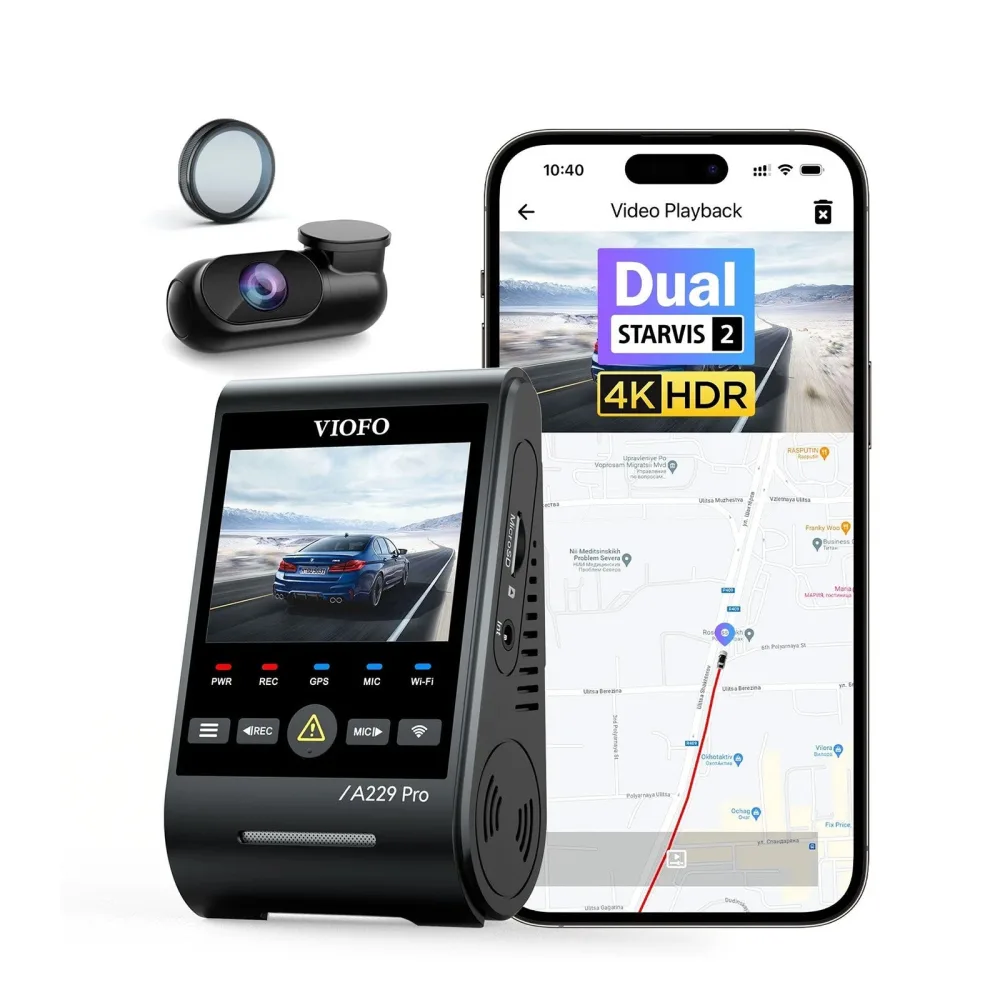 2-channel · ViofoViofo A229 Pro$219-380See price comparison →
In our catalog
2-channel · ViofoViofo A229 Pro$219-380See price comparison →
In our catalog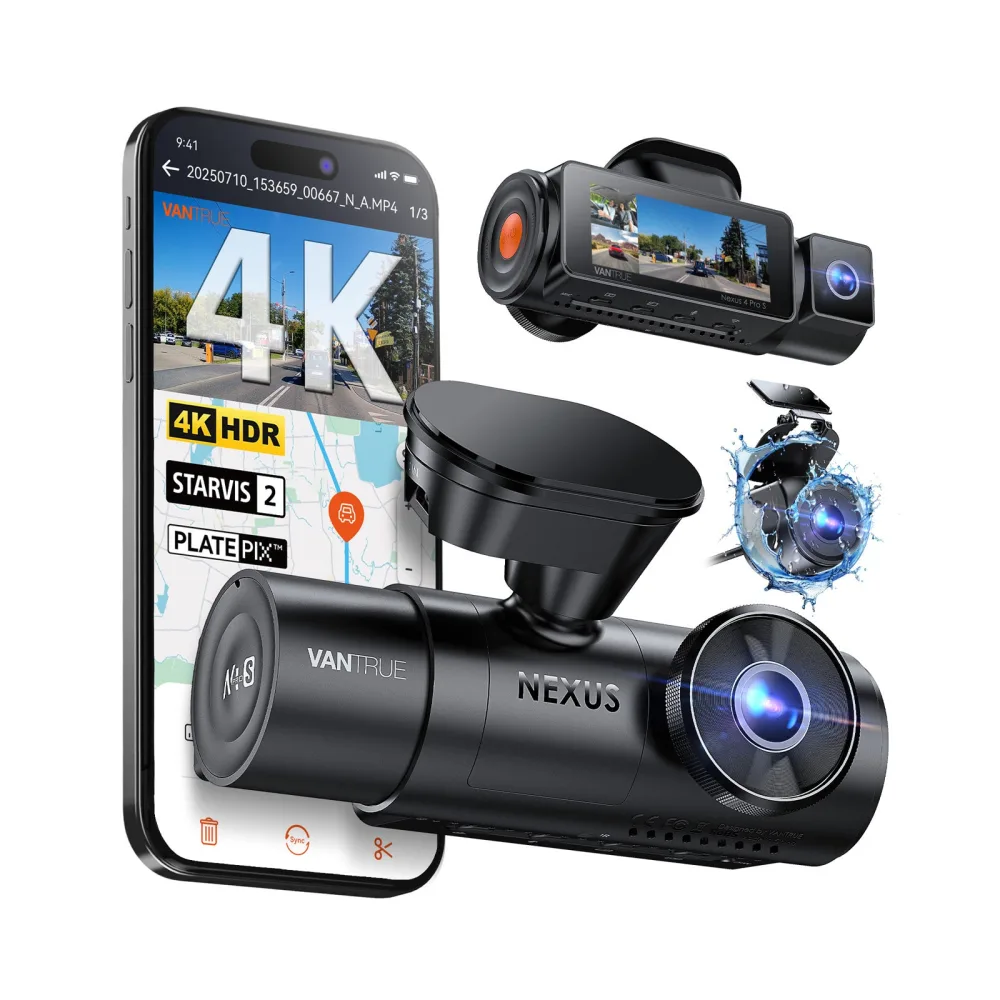 3-channel · VantrueVantrue N4 Pro S$240-280See price comparison →
Which should you buy?
- Hot climate, parks outdoors, want it to last → supercapacitor, every time
- Mild climate, garaged, budget-minded → a battery model is fine
- Rideshare, delivery, or daily parking mode → supercapacitor
Bottom line
If summer heat and longevity matter to you, buy a supercapacitor and don’t overthink it. We label the power-storage type on every model we track so you can filter for it instead of digging through spec sheets. See the catalog.
See the cams worth buying
We compare listed prices and link you straight to the lowest one, no fake urgency.