Can a Dash Cam Actually Read License Plates?
Sometimes, and far less often than the ads imply. When plates are readable, when they aren't, and how to improve your odds.
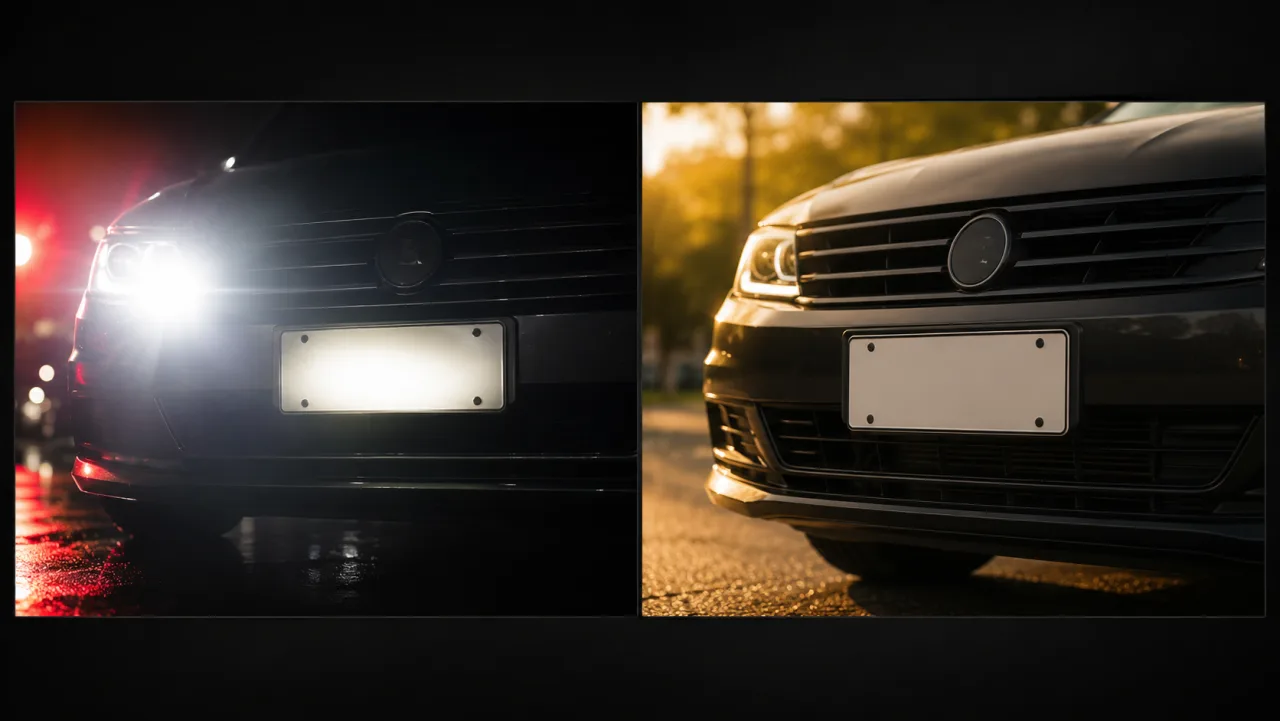
The honest answer first
Can a dash cam read license plates? Sometimes, and a lot less often than the marketing implies.
In good daylight at close range, a decent camera reads plates clearly. At night, at speed, or across lanes, even a 4K camera frequently can’t. Any listing promising “always-readable plates” is selling you the box art, not the footage.
Here’s the real picture, and how to give yourself the best odds.
Why plates are genuinely hard to capture
A license plate is small, and it’s built to be retroreflective, designed to bounce light straight back at the source. In daylight, that’s fine. At night it works against you: headlights from your car and everyone else’s reflect off the plate and blow it out to a white rectangle unless the camera’s HDR can rein in the glare.
Add motion (a plate moving relative to you smears across the handful of frames you catch it in) and you’ve got the two reasons most night and high-speed plate shots fail.
What actually decides legibility
Resolution gets the marketing attention, but it’s only one of four factors:
- Sensor quality: a strong sensor (Sony Starvis 2 is the current benchmark) gathers cleaner light. It matters more than megapixels.
- HDR/WDR: the feature that tames headlight glare at night.
- Bitrate: how much data per second the camera records. A high-res camera choked to a low bitrate smears the fine detail of a plate.
- Resolution: useful last. More pixels give you room to zoom, but only when the first three are already solid.
We go deeper on that trade-off in 4K vs 2K: does 4K really read plates better?
When plates ARE readable
- Daylight, stopped or slow: the car ahead at a red light is the easy case
- Close range: within a couple of car lengths
- Same direction, similar speed: low relative motion means the plate holds still across frames
When plates AREN’T
- Night, especially with oncoming headlights: glare wins
- Oncoming traffic: closing speed blurs the plate in the few frames you get
- Cross traffic and fast passes: same blur problem
- Rain, a dirty lens, or a grime-covered plate: all kill legibility before resolution even matters
How to improve your odds
- Buy for sensor and HDR first, resolution second.
- Keep the windshield and lens clean: mount where wipers actually reach.
- Lean on approach footage: the seconds before contact, when the other car is closer and slower. That’s where the plate is readable. It’s also exactly why buffered parking mode exists.
Set the right expectation
Here’s the reframe: a dash cam’s main job isn’t to read every plate. It’s to prove what happened.
Who had the light. Who changed lanes. Whether brake lights came on. It does that brilliantly, in every condition, every time. Plate capture is a bonus it earns in good conditions, not a guarantee in all of them.
Treat it as likely in daylight, hopeful at night, and the camera will rarely let you down.
In our catalog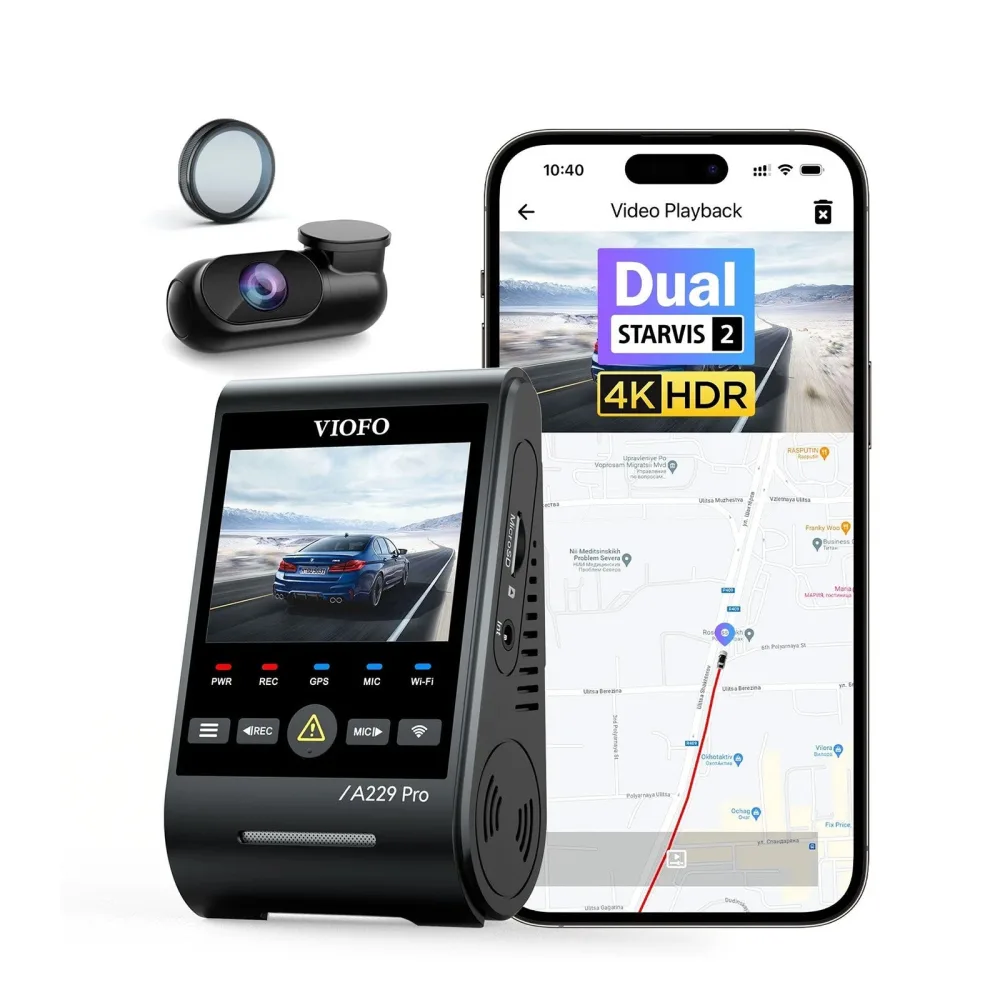 2-channel · ViofoViofo A229 Pro$219-380See price comparison →
Bottom line
Great in daylight. Unreliable at speed and at night, true of every camera; the better ones just struggle less. Buy for sensor and HDR, keep the glass clean, and lean on approach footage. See the catalog.
See the cams worth buying
We compare listed prices and link you straight to the lowest one, no fake urgency.