4K vs 1080p Dash Cam: Is the Upgrade Worth It in 2026?
We cut through the marketing hype to tell you when 4K actually matters, when it doesn't, and which cams deliver real detail for the money.
Here’s the gist: A 4K dash cam can be worth the upgrade over 1080p if you care about reading plates and capturing detail in varied lighting, but only when it’s paired with a good sensor, bitrate, and lens. A well-tuned 1080p or 2K unit can still be plenty for basic incident documentation. Below we break down what actually matters, then give you the full lineup of picks, from budget 2K to premium 4K, so you can decide for yourself.
The Short Answer: It Depends on More Than Just the Resolution Number
Resolution alone doesn’t guarantee a better image. A cheap 4K cam with a weak sensor and aggressive compression may not deliver the detail its resolution suggests, while a well-tuned 1080p unit can still be adequate for basic evidence. The real magic is in the sensor, the bitrate, and the lens.
- Sensor quality: Modern 4K cams that impress reviewers almost all use Sony STARVIS or STARVIS 2 sensors. These deliver better low-light performance and dynamic range than older CMOS parts.
- True resolution: Look for native 4K (3840×2160) rather than upscaled “4K”; consider frame rate alongside resolution, since higher resolution can affect achievable frame rates.
- Bitrate and compression: Higher resolution is only useful if the video is encoded at a decent bitrate. Budget 4K units may smear details; a well-tuned 1080p unit can still be adequate, though it won’t match a good 4K implementation for fine detail.
- Lens quality: A high-quality lens with a sensible field of view (often 140-160°) and low distortion matters as much as resolution.
- Night performance: HDR/WDR and back-illuminated sensors can help 4K cams manage challenging nighttime lighting, reducing blown highlights and improving shadow detail.
Bottom line: 4K can be worthwhile for evidence quality, especially with STARVIS/STARVIS 2 sensors, good lenses, and high bitrates, but resolution alone is not enough. For budget buyers, a good 1080p or 2K unit with strong low-light performance can still be a rational choice.
Best Overall 4K: Viofo A329S
If you want excellent 4K image quality without stepping into cloud-subscription territory, the A329S is our top pick. It’s a 4K cam available in multiple configurations with parking mode support.
- Multiple configurations: available in 1-channel, 2-channel, and 3-channel variants.
- 4K resolution for detailed footage.
- Parking mode with hardwire kit or external battery pack.
- Reliable performer with strong night video.
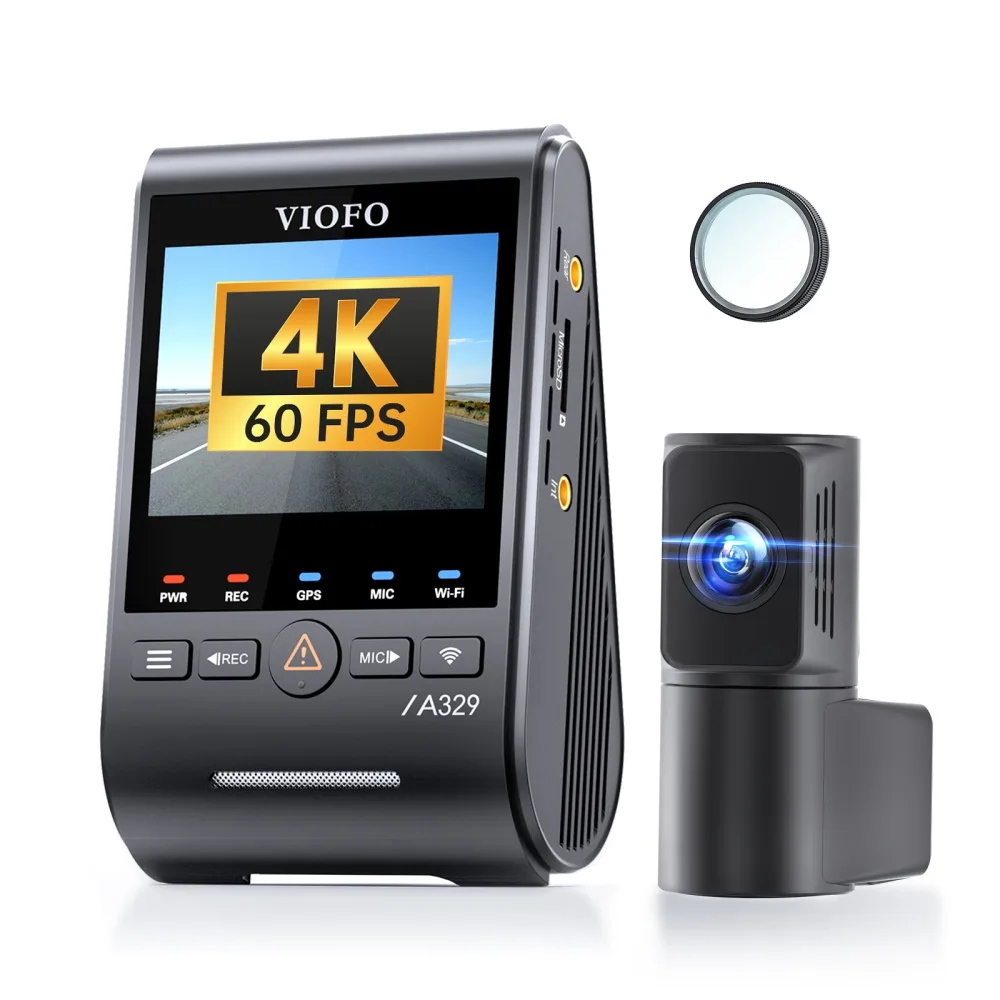 1-channel · ViofoViofo A329Saround $280See price comparison →
Best Value 2K Dual-Channel: Viofo A229 Plus
Want front and rear coverage without paying flagship prices? The A229 Plus is a 2-channel system with dual recording and parking mode. It’s the sweet spot for daily drivers.
- 2-channel (front + rear), both 2K (2560×1440).
- Dual recording for complete coverage.
- Parking mode with hardwire kit or external battery pack.
- Great value for the feature set.
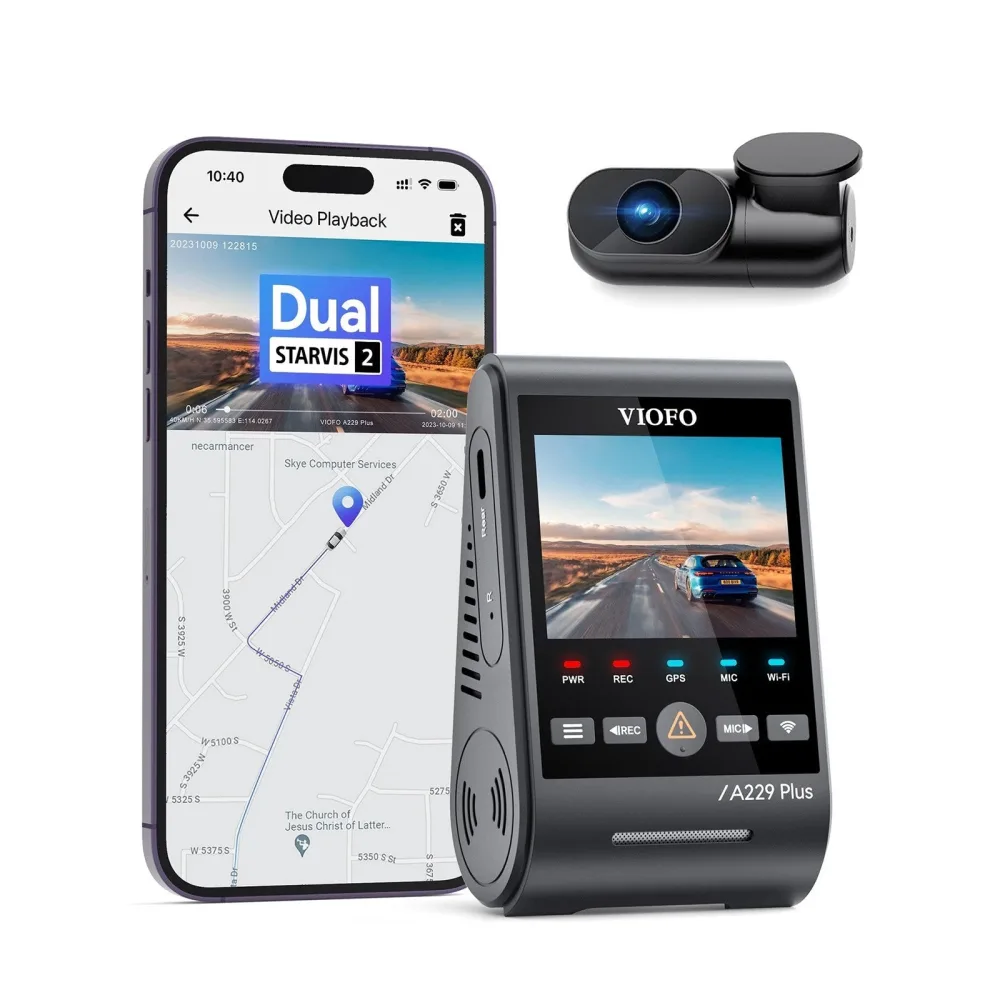 2-channel · ViofoViofo A229 Plus$159-230See price comparison →
Best Mainstream 4K: Viofo A229 Pro
The A229 Pro is available in 1-channel, 2-channel, and 3-channel configurations, with a 4K front camera. In dual-channel form, it pairs a 4K front with a 2K rear using STARVIS 2 sensors.
- 1-channel, 2-channel & 3-channel options.
- 4K front + 2K rear in dual-channel form (rear is 2K, not 1080p).
- STARVIS 2 sensors for excellent low-light performance.
- Built-in GPS and Wi-Fi (no built-in LTE).
- Buffered parking mode with hardwire kit.
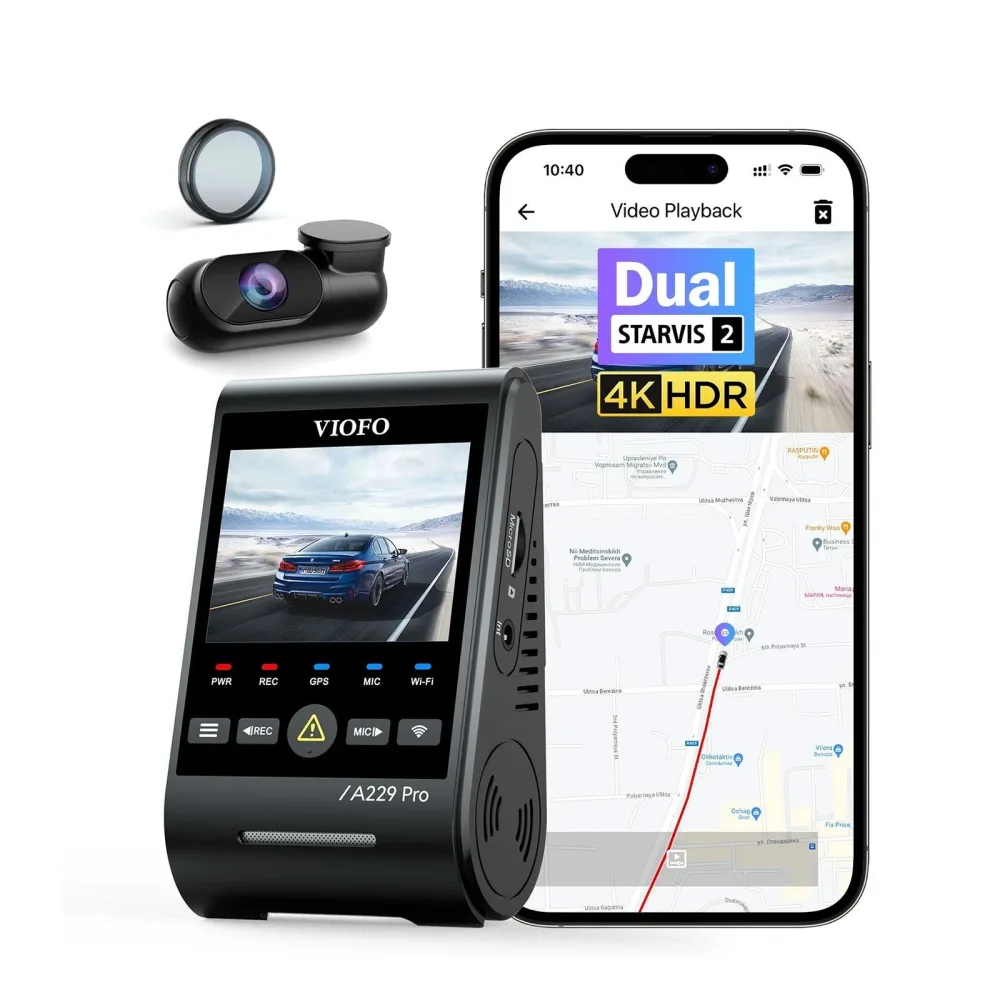 2-channel · ViofoViofo A229 Pro$219-380See price comparison →
Best Front-Only 4K: Miofive S1
The Miofive S1 is a 4K dash cam focused on front coverage, offering a simpler entry point if you just want high-resolution front video.
- Front-focused 4K.
- Straightforward design.
- Simple setup for basic incident documentation.
 1-channel · MiofiveMiofive S1around $90See price comparison →
Best 2K Value (If You Don’t Need 4K): Viofo A119 Mini 2
If you’re on the fence about 4K, this 2K QHD front-only cam is a smart compromise. It offers higher detail than 1080p while avoiding 4K-tier pricing.
- Front-only 2K QHD.
- Parking mode with hardwire kit or external battery pack.
- Compact design.
 1-channel · ViofoViofo A119 Mini 2around $120See price comparison →
Best Premium 4K with Cloud: BlackVue DR970X-2CH
For those who want remote access and cloud features, the DR970X-2CH is a 2-channel system with 4K front and Full HD 1080p rear recording. Cloud features require an internet connection; supported features and any necessary accessories can depend on the model and region, so check compatibility before buying. It’s a premium option for fleet or high-end users.
- 2-channel (front + rear).
- 4K front + 1080p rear resolution.
- Cloud capability (requires internet; check supported features and accessories for your model and region).
- Parking mode with hardwire kit.
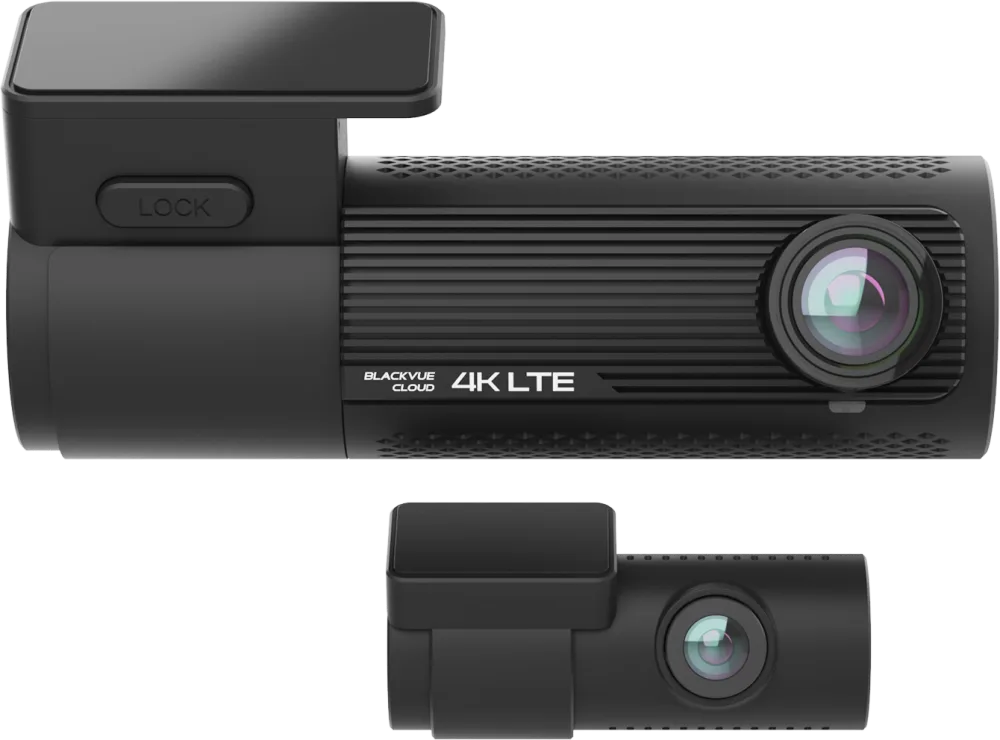 2-channel · BlackVueBlackVue DR970X-2CH$305-650See price comparison →
Best 4K for Rideshare: Vantrue N4 Pro S
Rideshare drivers need interior coverage, and the N4 Pro S delivers 3-channel recording with a 4K front plus rear and interior cameras. It’s a top choice for Uber/Lyft.
- 3-channel (front + rear + interior).
- 4K front plus rear and interior cameras.
- Parking mode with hardwire kit.
- Designed for rideshare and fleet use.
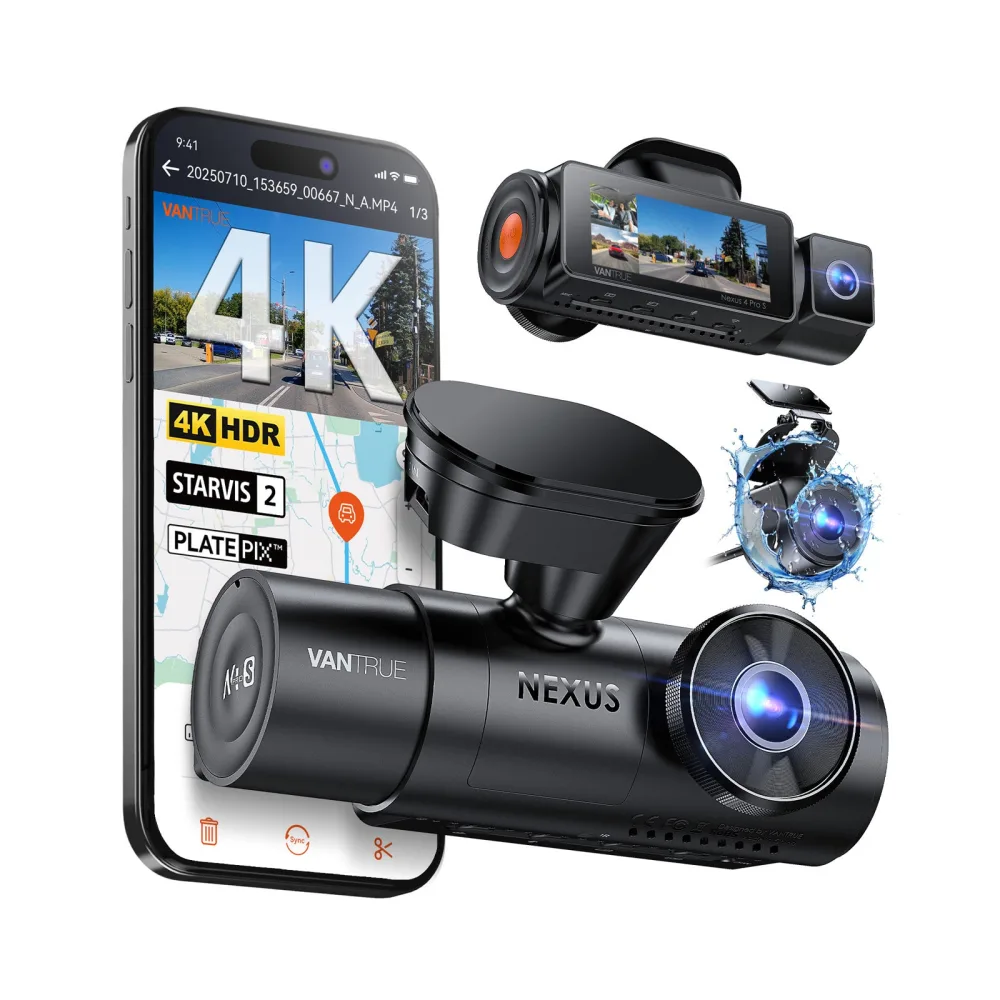 3-channel · VantrueVantrue N4 Pro S$240-280See price comparison →
Bottom Line
If you care about reading plates and capturing fine detail, especially at night, a 4K dash cam with a quality sensor can be worth the upgrade. But don’t buy on resolution alone. A well-tuned 2K or 1080p cam can still get the job done for less. Our top overall pick is the Viofo A329S for its 4K clarity and expandability. For the best value dual-channel, go with the Viofo A229 Plus. And if you want the mainstream 4K sweet spot, the Viofo A229 Pro is hard to beat.
See the cams worth buying
We compare listed prices and link you straight to the lowest one, no fake urgency.